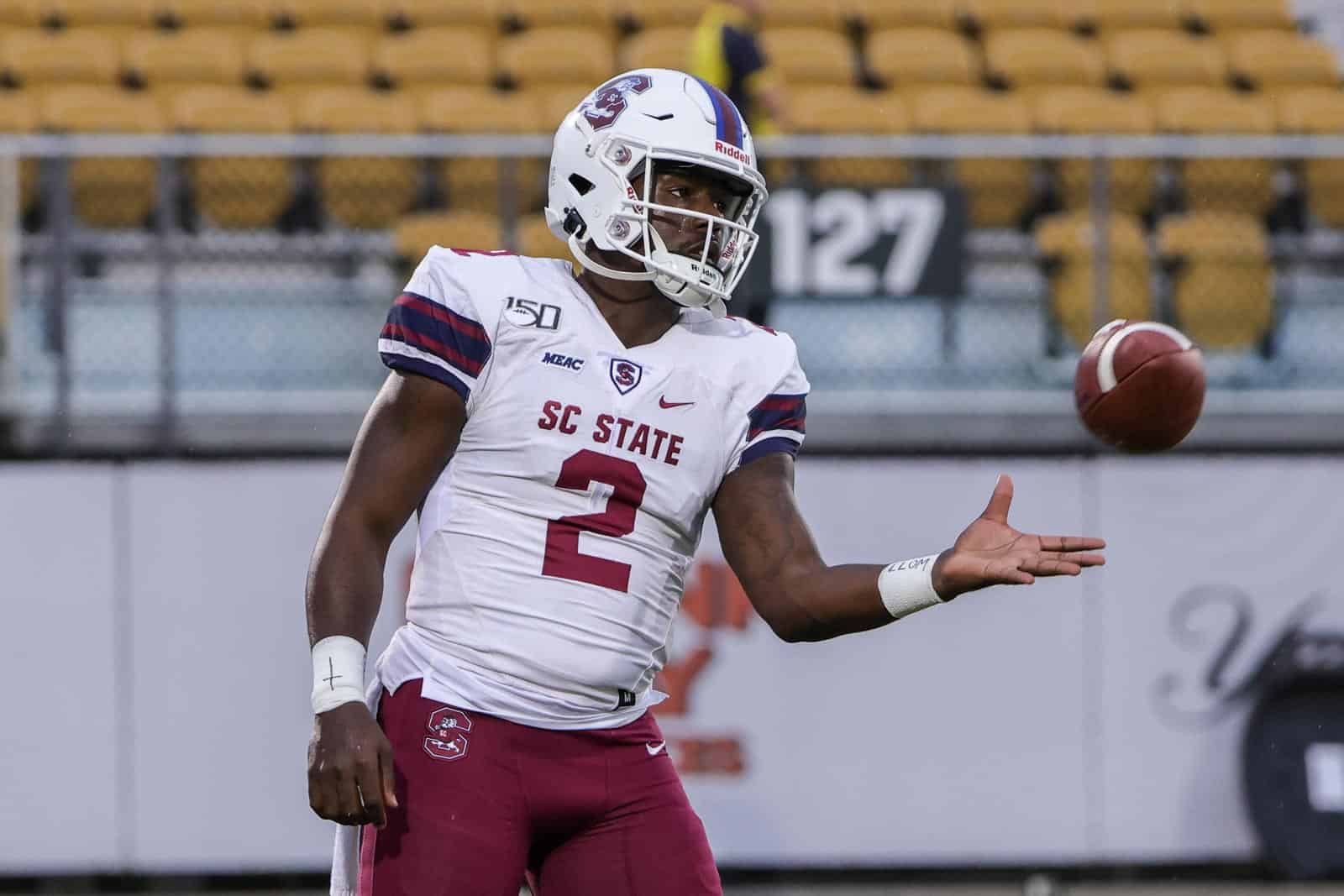
South Carolina State erased a 21-point deficit and beat Prairie View A&M 40–38 in four overtimes to win the 2025 Celebration Bowl in Atlanta. The dramatic finish delivered the Bulldogs another Black college football national championship and a powerful redemption arc after last year’s loss.
South Carolina State wins epic 4OT Celebration Bowl to reclaim HBCU national title
From 21 points down to Black college football champions again
On December 13, 2025, South Carolina State turned the Cricket Celebration Bowl into an instant classic, storming back from a 21-point halftime deficit to defeat Prairie View A&M 40–38 in four overtimes at Mercedes-Benz Stadium in Atlanta. In a game that doubled as the de facto Black college football national championship, the Bulldogs outlasted the Panthers in the 10th edition of the bowl and secured another HBCU national title in one of the wildest postseason finishes you will see at any level.
The matchup featured two conference champions at the top of their games. South Carolina State, representing the Mid-Eastern Athletic Conference (MEAC), entered at 9–3 after winning its second straight league title and completing a second consecutive undefeated conference slate under second-year head coach Chennis Berry. Prairie View A&M, champions of the Southwestern Athletic Conference (SWAC), came in at 10–3 after edging Jackson State 23–21 for its first SWAC crown since 2009 and its first 10-win season since the early 1960s under first-year head coach Tremaine Jackson.
Both programs embraced Atlanta as their season’s destination. For Prairie View A&M, it was a historic first appearance in the Celebration Bowl. For South Carolina State, it was familiar ground: a third trip in five years, including a 2021 win over Jackson State and a painful loss in the 2024 edition that framed this year’s game as a clear redemption opportunity.
Prairie View A&M’s first-half onslaught sets the stage
For nearly two quarters, it looked like Prairie View A&M would turn the national stage into a coronation. Quarterback Cameron Peters dissected the Bulldogs defense with poise and precision, directing three first-half touchdowns. He threw two scores and added another on a 27-yard keeper as the Panthers raced to a 21–0 lead by halftime.
By the break, the stats were brutal for South Carolina State. Prairie View A&M had piled up 319 total yards compared with just 80 for the Bulldogs. The Panthers defense forced five first-half punts and notched three sacks, consistently winning on early downs and forcing South Carolina State behind the sticks. The Bulldogs offense, which had powered an undefeated 5–0 MEAC run, suddenly looked out of rhythm against a swarming front and disciplined coverage.
Compounding South Carolina State’s challenge, starting quarterback William “Billy” Atkins IV exited late in the second quarter with a shoulder injury. That thrust backup Ryan Stubblefield into the huddle before halftime, a critical turning point that would reshape the game and the program’s season.
Momentum flips: the Bulldogs’ defense sparks a record rally
Berry’s team did not wait long after intermission to shift the entire feel of the contest. Early in the third quarter, South Carolina State’s defense sniffed out an attempted reverse, attacking the exchange point and knocking the ball loose. Defensive lineman Jordan Dollard scooped up the fumble and rumbled it back to the Prairie View A&M 5-yard line.
One snap later, running back Tyler Smith powered into the end zone for the Bulldogs’ first points of the afternoon. It was more than just a touchdown. It was the emotional jolt South Carolina State needed, flipping field position, silencing the Panthers’ momentum and giving a previously stagnant offense fresh life.
The score ignited a 21-point third-quarter surge that would go down as the largest comeback in Celebration Bowl history. On the next meaningful drive, Stubblefield showed the poise of a veteran starter. He uncorked a deep ball to wide receiver Nigel Johnson, setting up a 10-yard rushing touchdown by wideout Jordan Smith on a carefully designed perimeter run. Suddenly, the Bulldogs were within one score and attacking in waves.
Later in the quarter, Stubblefield and Jordan Smith connected again, this time on a 19-yard touchdown strike. Smith slipped behind the secondary, tracked the ball and completed the catch that officially erased the 21-point deficit. With just over five minutes remaining in the third quarter, the scoreboard read 21–21, and the once-dominant Panthers were in a dogfight.
Jordan Smith’s career day on the biggest stage
For Jordan Smith, the third-quarter rally became a signature chapter in a veteran career. Appearing in his third Celebration Bowl for South Carolina State, Smith delivered his best performance yet: nine catches for 152 yards, two receiving touchdowns and the earlier rushing score on the comeback drive.
In an era where postseason exposure can significantly shape an athlete’s profile, Smith’s outing is the kind of nationally televised moment that resonates with recruiters and fans alike. His versatility as a runner and receiver highlighted the creative ways modern offenses deploy their best athletes and underscored how critical playmakers are when momentum swings.
Fourth quarter fireworks and the march to overtime
Prairie View A&M refused to fold after losing its three-touchdown cushion. Early in the fourth quarter, Peters responded to the Bulldogs’ flurry with another explosive strike. He hit receiver Cameron Bonner on a 78-yard catch-and-run down the right sideline, restoring a 35–28 Panthers lead and pushing Peters past the 400-yard passing mark.
The play showcased why Peters was one of the key storylines of the game: arm talent, confidence and the ability to stretch the field in a single snap. According to profiles of the Celebration Bowl’s evolution, high-powered passing performances like Peters’ have become emblematic of how HBCU offenses have modernized and expanded their schemes on big stages (NCAA.com).
Still, South Carolina State answered. With time winding down, Stubblefield orchestrated a composed, balanced drive. The Bulldogs mixed quick throws, timely runs and a crucial third-down conversion, showing just how far their in-game adjustments had come since the first half. With under two minutes to play, Stubblefield once again found Jordan Smith, this time on a 10-yard touchdown pass. The extra point tied the game at 35–35 and sent the Celebration Bowl into an overtime that would eventually rewrite its record book.
Inside a four-overtime thriller
The first overtime followed a more traditional script. Prairie View A&M’s Diego Alfaro drilled a 36-yard field goal to put the Panthers up 38–35. On the other side, South Carolina State’s Nico Cavanillas Alti calmly answered with a 40-yard field goal, knotting the score again at 38–38.
In the second overtime, the game teetered on the brink of a Prairie View walk-off. On South Carolina State’s first possession, Panthers defensive back Cornelius Davis stepped in front of a pass in the end zone, intercepting Stubblefield and setting up a golden opportunity. Any score would have ended the contest and handed the Black college national title to Prairie View A&M.
But Alfaro’s 31-yard attempt sailed just right of the upright, extending the night and giving the Bulldogs the lifeline they needed. From there, NCAA overtime rules shifted the format. Beginning with the third extra period, both offenses moved directly to alternating two-point conversion attempts, a rule designed to limit the length of games and reduce player wear and tear while preserving late-game drama (ESPN, on NCAA OT rules).
Both teams failed to convert in the third overtime, preserving the 38–38 deadlock and leading to a decisive fourth attempt from the 3-yard line.
Tyler Smith’s stretch and a defensive stand for the title
In the fourth overtime, South Carolina State had the ball first. Offensive coordinator play calls leaned on Stubblefield’s mobility and Smith’s vision near the goal line. Rolling to his right, Stubblefield dumped a short pass to Tyler Smith in the flat. Smith turned upfield, dove toward the pylon and stretched the ball out, narrowly breaking the plane of the goal line.
Officials signaled good on the field, and a lengthy video review upheld the ruling. The conversion gave the Bulldogs a 40–38 lead, handing the pressure directly to Prairie View A&M’s offense.
On the Panthers’ answering try, Peters looked to his legs, attempting to power his way into the end zone for the tying score. This time, the Bulldogs’ defense swarmed, building a wall just short of the goal line and stopping Peters inches from a potential fifth overtime. The stand sealed South Carolina State’s second Celebration Bowl victory and punctuated a 21-point comeback that will live in HBCU football history.
MVP performances and a night of stars
Backup quarterback Ryan Stubblefield, who entered late in the second quarter after Atkins’ shoulder injury, finished 15-of-25 for 234 passing yards with two touchdowns through the air. He added 11 carries for 11 yards and another score on the ground, earning Offensive Most Valuable Player honors.
Stepping into a championship atmosphere cold is one of the most difficult tasks in football. Doing it while trailing 21–0 in a nationally televised bowl amplifies the challenge. Stubblefield’s performance is a textbook example of why depth at quarterback has become such a priority in modern college recruiting and roster building. Programs with multiple game-ready quarterbacks are simply better positioned to survive the kind of adversity this game presented.
On the perimeter, Jordan Smith’s career day helped unlock the Bulldogs attack and gave Stubblefield a reliable go-to option whenever the offense needed a spark. His combination of route running, yards after the catch and red-zone versatility showed the kind of complete receiver profile that can elevate any offense at the FCS and HBCU levels.
Defensively, safety Brenyen Scott anchored the Bulldogs, finishing with nine tackles and a tackle for loss to earn Defensive MVP honors. Along with the front seven that created the pivotal third-quarter takeaway, Scott’s presence in the box and in coverage exemplified how impact safeties can change the complexion of high-scoring games.
For Prairie View A&M, Peters’ stat line underscored just how close the Panthers came to their first Celebration Bowl crown. He set a Celebration Bowl record with 412 passing yards, threw four touchdown passes and added another on the ground. In any other context, that kind of performance would almost certainly headline a championship story. On this day, it became part of an unforgettable duel.
What this win means for South Carolina State and HBCU football
The victory pushed South Carolina State to a 10–3 final record and capped a season that already featured a second straight MEAC championship and a perfect 5–0 conference mark. By defeating Prairie View A&M, the Bulldogs secured another Black college national championship, their first since that 2021 Celebration Bowl win over Jackson State, bringing the program’s HBCU national title tally to seven.
It also delivered a powerful sense of redemption. Just a year earlier, South Carolina State walked off the same Mercedes-Benz Stadium turf after a Celebration Bowl loss that stung across the program and fan base. This time, the Bulldogs left with confetti falling, validating Berry’s vision and reinforcing the university’s status as a modern standard-bearer in HBCU football.
Within the broader landscape of FCS and HBCU athletics, the Celebration Bowl has become a crucial showcase. It highlights not only team success but also individual talent in front of national television audiences and pro scouts. Performances like those from Stubblefield, Jordan Smith, Peters and Scott help elevate the profile of HBCU football and demonstrate the depth of skill and coaching that exists outside the Power Five spotlight.
For athletes and families following recruiting, games like this are a reminder that meaningful opportunities, exposure and development exist across Division I, including at HBCUs and service academies alike. Whether you are looking at a traditional FBS program or a unique pathway like the United States Air Force Academy, the key is finding the right fit academically, athletically and personally.
What recruits can learn from this 4OT classic
From a recruiting and player-development standpoint, the 2025 Celebration Bowl offers several clear takeaways for high school prospects and their families.
- Depth matters: Stubblefield’s emergence off the bench shows how important it is for programs to build reliable depth, especially at quarterback. Recruits should look closely at quarterback rooms and development plans when evaluating schools.
- Versatility is a recruiting asset: Jordan Smith’s ability to impact the game as both a runner and receiver made him nearly impossible to game-plan for. Multi-position and multi-skill athletes often see expanded roles in creative college offenses.
- Defense still wins championships: The key turning point was a defensive takeaway and the final seal was a goal-line stand. For defensive prospects, games like this show how valuable disruptive linemen, rangy safeties and disciplined tacklers are in modern schemes.
- HBCUs and FCS programs offer big stages: The Celebration Bowl stage, national TV, and packed NFL stadium setting underscore that you do not need a Power Five logo on your helmet to play in huge, championship environments.
Understanding how different programs use their personnel, what kinds of offenses and defenses they run, and how they develop players over time is critical. Tools like Pathley Chat can help athletes quickly compare schools, explore scheme fits and see where their profile might align with programs similar to South Carolina State or Prairie View A&M.
Exploring other high-level football options
If the intensity and stage of the Celebration Bowl appeal to you, it is worth expanding your view of what top-level college football can look like. Service academies and strong mid-major programs offer a combination of elite competition, national exposure and unique career pathways.
For example, the United States Air Force Academy competes at the Division I level with a storied football tradition and a leadership-focused academic mission. Similarly, the University of Akron and United States Military Academy (Army West Point) provide high-visibility platforms in competitive conferences, while institutions like American University emphasize strong academics and a distinct campus experience even as their athletic footprints vary by sport.
Looking beyond just one level or conference broadens your options and helps you identify programs where you can realistically compete, grow and be seen.
How Pathley helps athletes navigate moments like this
For many recruits watching the Celebration Bowl, the natural question is: how do I find a college situation where I can play in games like that, or build a career that fits my goals the way Air Force or other D1 programs do for their athletes?
That is where using a structured, data-informed approach to your search matters. With Pathley, athletes can explore colleges by division, geography, academic interests and competitive level, then layer in athletic goals to see where they might fit best. The platform’s AI-driven tools help you discover schools you might not have considered, compare options side by side and understand how your profile aligns with different types of programs.
If you are ready to take that next step, creating a free Pathley account unlocks guided search, college matching and planning tools tailored to your situation. You can get started at https://app.pathley.ai/sign_up, then use Pathley Chat inside the app to ask questions, refine your target list and build a roadmap toward moments like the 2025 Celebration Bowl.
South Carolina State’s 4OT thriller over Prairie View A&M is the kind of game that turns athletes into legends and seasons into program milestones. With the right information and tools, you can chart a path to your own version of that stage, whether it is at an HBCU powerhouse, a service academy, or another Division I program that fits who you are on and off the field.