

College Search
Thank you! Your submission has been received!
Oops! Something went wrong while submitting the form.


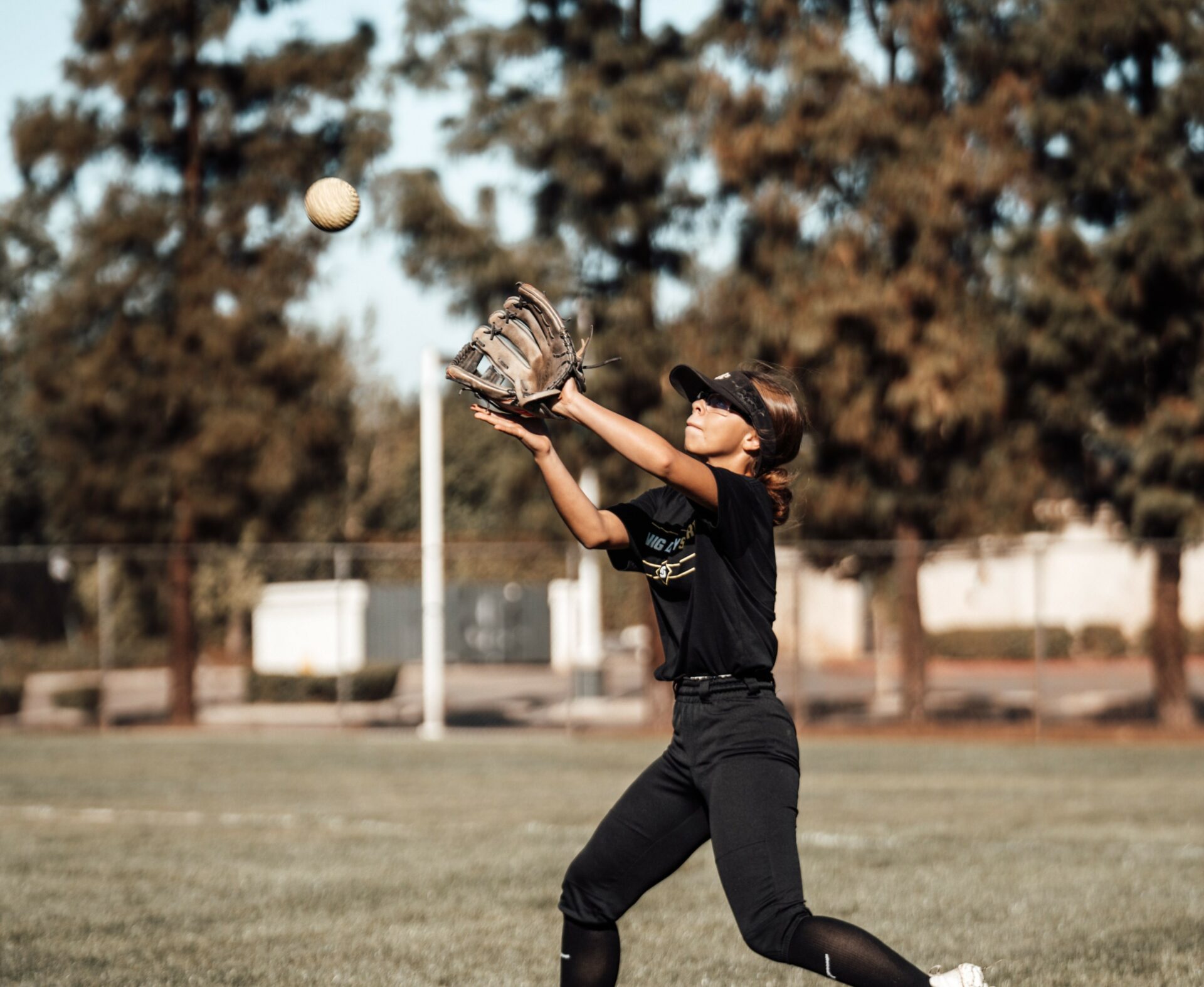

If you are serious about playing college softball, you have probably heard people talk about recruiting standards for pitchers, shortstops, or power hitters. Maybe you have seen random velocity charts on social media or heard that Division I pitchers have to throw 65 plus and been left wondering whether you are close, behind, or already there.
The truth is that softball recruiting standards are real, but they are not one magic cutoff number. They are ranges coaches use to project who can compete in their conference, in their system, and against their schedule. Understanding those ranges helps you pick the right level, target the right schools, and train with a purpose instead of guessing.
At some point you are probably asking yourself, When is the right time to start taking softball recruiting standards seriously in my own process? That question alone shows you are already thinking like a college recruit.
In this guide we will break down what softball recruiting standards actually are, sample ranges by position and level, how coaches use them, and how to build a real recruiting plan around your numbers. We will also talk about how tools like Pathley can help you match your current measurables and goals with realistic college fits.
Softball recruiting standards are position specific benchmarks that college coaches use when they evaluate prospects. They are not official NCAA rules or guarantees of a roster spot. Instead, they are typical ranges for measurables like pitch velocity, exit velocity, home to first times, and pop times that help coaches answer one basic question: can this athlete compete at our level in our conference.
These standards are usually based on a combination of factors:
- The level of play the staff recruits for, such as Power Five D1, mid major D1, D2, D3, NAIA, or JUCO
- The style of play in that conference, for example more power focused vs more speed and short game
- Typical measurables of current starters and recent recruits at that position
- Roster needs by grad year, depth chart, and how many players they are losing
- Your size, athleticism, and room to develop over the next 1 to 3 years
- Video and live evaluation that shows how your tools actually play in games, not just at a showcase
There is no single universal chart that every college follows. A mid major Division I program in a colder weather conference may recruit a different profile than a top 10 national powerhouse, even though both are technically Division I. The same is true when you compare strong Division II programs, academic focused Division III schools, NAIA programs, and junior colleges.
For context on scholarships and roster rules across divisions, the NCAA publishes sport by sport scholarship limits and eligibility information for prospects in its resources for future student athletes. You can review those details directly from the NCAA at this scholarship limits overview and in the official Guide for the College Bound Student Athlete.
College coaches receive emails, videos, and recommendations on hundreds or even thousands of softball players every year. They simply do not have the time to study every athlete in depth. Standards let them quickly sort the pool into rough buckets:
From there, coaches dive deeper on video, in person evaluation, and character references. Standards open the door, then things like softball IQ, competitiveness, academics, and fit with the team culture decide whether you actually get recruited.
As the level of play rises, the game gets faster and more physical. Pitches carry more velocity and movement, balls are hit harder, defenders cover more ground, and the speed of decisions increases. That shows up clearly in the numbers.
In general, you will see these patterns:
- Top Division I programs recruit the highest velocity arms, quickest defenders, and most explosive bats, often with multiple tools at an above average or elite level
- Mid major Division I and top Division II programs still expect strong measurables, but may take more “projection” players who are a little behind now but trending up
- Division II, strong Division III, NAIA, and JUCO programs often recruit very similar tools, then sort by academics, budget, and fit
- As you move down levels, the game gets slightly slower, and coaches are more willing to carry a player who is plus in one area even if another metric is below the “ideal” range
- At every level, coaches are more excited about an athlete who is improving and competitive than about one who hit a big number one time and then flatlined
The key is that you are not trying to hit some mythical national average. You are trying to find the tier of programs where your current and projected tools match what coaches in that tier actually recruit.
Every position has different responsibilities, so coaches lean on different measurables when they build their recruiting boards. Below are the core numbers that matter most, along with typical college level ranges. These are not promises, just realistic reference points based on current trends.
For pitchers, coaches care about three big things: velocity, movement, and command. Velocity is the easiest to measure, so it often gets the most attention, but movement patterns and the ability to locate in the zone decide whether your velocity actually plays.
Typical fastball velocity ranges for right handed pitchers might look like this:
- Top Division I: roughly 62 to 68 plus mph, with some Power Five aces touching the high 60s or a bit higher
- Mid major Division I: roughly 60 to 65 mph, with at least one plus secondary pitch and real command
- Lower Division I and top Division II: roughly 58 to 62 mph, with movement, spin, and the ability to locate
- Most Division II and strong NAIA or JUCO: roughly 56 to 60 mph, with two or more usable pitches and competitive mound presence
- Division III, other NAIA, and many JUCOs: roughly 54 to 58 mph, with solid command and a plan for how to get lineups out
These are ranges, not hard cutoffs. A pitcher at the low end of a range with elite spin, deception, and command can be more recruitable than a pure velocity arm who cannot locate or handle pressure.
Left handed pitchers may recruit a little differently, especially if they create tough angles and have deceptive movement. For both sides, coaches also track:
- Spin rate and movement quality on each pitch, not just the fastball
- The number of truly competitive pitches in your arsenal and how often you can throw them for strikes
- Strike percentage, walk rate, and how often you fall behind in counts
- Ability to change speeds and eye levels, not just throw as hard as possible
- Composure with runners on base and when the zone feels tight
- How your stuff looks against good travel or high school lineups, not only at lessons or bullpens
Smart coaches recruit more than just the hardest thrower on a travel ball staff. They look for pitchers who can get college hitters out multiple times through the order.
For catchers, a strong arm helps, but the position is built on defense, leadership, and toughness. The measurable that gets thrown around the most is pop time, the time from the ball hitting your glove to reaching second base.
Rough pop time ranges:
- Top Division I: around 1.70 to 1.90 seconds on a clean, accurate throw
- Other Division I and top Division II: around 1.85 to 2.05 seconds
- Most Division II and strong Division III, NAIA, JUCO: around 1.95 to 2.15 seconds
- Developmental college prospects: around 2.10 to 2.30 seconds, with room to tighten footwork and transfer
Pop time alone does not make or break a catcher, but it is a quick indicator of arm strength, exchange, and efficiency.
Coaches will also look at:
- Receiving skills, quiet hands, and how well you present borderline pitches
- Blocking technique and willingness to keep the ball in front in big spots
- Game calling, communication with pitchers, and understanding of hitters
- Leadership qualities and how you direct the defense
- Durability, toughness, and how you handle long days behind the plate
- Accuracy and carry on throws to all bases, not just your best ball to second
A slightly slower pop time can still play at a high level if everything else is elite, especially your ability to handle a pitching staff.
For shortstops and second basemen, the game is about range, rhythm, and arm strength across the diamond. Third basemen need similar tools, with even quicker reactions on hot shots.
Key measurables include:
- Infield throwing velocity across the diamond, often:
- Top Division I: roughly mid 60s mph or higher
- Other D1 and D2: roughly high 50s to low 60s mph
- D3, NAIA, JUCO: roughly mid 50s and up, depending on feel and quickness
- Home to first times, especially out of game situations:
- High end middle infielders often live around 2.9 to 3.1 seconds from the right side
- Lateral quickness and first step times in short shuttle or similar tests
- Consistency fielding routine plays with low error rates over full seasons
Coaches also study footwork, ability to turn double plays, internal clock on slow rollers, and how well you finish plays on the move.
Corner players are often recruited for power. Outfielders are recruited for a mix of speed and arm strength. Exit velocity is a common metric used to capture how hard you hit the ball.
Typical exit velocity ranges might look like this:
- Top Division I power bats: roughly 70 to 75 plus mph off a tee or front toss, with game swings that back it up
- Other Division I and top Division II: roughly 67 to 72 mph
- Most Division II and strong D3, NAIA, JUCO: roughly 64 to 69 mph
- Developmental college prospects: roughly 60 to 65 mph with clear strength gains over time
Again, these are rough bands. A hitter on the lower end who barrels the ball often and controls the zone can be more valuable than a higher EV hitter who rarely squares it up.
For outfielders, throwing velocity from the outfield often sits roughly:
- Top Division I: low 70s mph and higher on clean, accurate throws
- Other Division I and Division II: high 60s to low 70s mph
- D3, NAIA, JUCO: mid 60s mph with good carry and accuracy
Coaches pair this with your routes, jumps off the bat, communication, and how confidently you handle balls at the wall and in the gaps.
For outfielders, throwing velocity from the outfield can range from the low 60s into the low 70s at the highest levels. Coaches also time full sprint speed from home to first and first to third, and grade how well you track balls off the bat, take routes, and communicate in space.
Not every recruit fits into a power profile. Many college lineups depend on slappers or top of the order speed threats to put pressure on defenses. For these athletes, the bat path and your ability to manipulate the ball matter as much as traditional power metrics.
Coaches will zero in on:
- Home to first times, often:
- Elite slappers and speed threats: roughly 2.6 to 2.8 seconds from the left side
- Strong college level speed: roughly 2.8 to 3.0 seconds
- Consistency putting balls in play that stress the infield, not just mishit choppers
- Ability to place the ball into different zones, like hard slaps through the 3–4 or 5–6 hole
- Reads on pitchers and willingness to use drag, soft slap, and firm slap options
- Baserunning instincts, jumps, and success rate stealing or taking extra bases
- How well your speed actually changes the game when you get on base
The sample softball recruiting standards below are meant to give you a general picture of what different levels look for. Every program is different. Your goal is not to obsess over a single number, but to see which band your current tools most closely match.
For a typical position player profile, rough ranges might look like:
- Top Division I
- Home to first: roughly 2.6 to 3.0 seconds depending on position and role
- Exit velocity: roughly 70 to 75 plus mph for middle of the order bats, mid to high 60s for table setters
- Infield velocity: mid 60s plus mph for shortstops and third basemen
- Outfield velocity: low 70s plus mph with carry and accuracy
- Other Division I and top Division II
- Home to first: roughly 2.8 to 3.1 seconds
- Exit velocity: roughly 67 to 72 mph
- Infield velocity: high 50s to low 60s mph
- Outfield velocity: high 60s to low 70s mph
- Most Division II, strong Division III, NAIA, JUCO
- Home to first: roughly 3.0 to 3.3 seconds
- Exit velocity: roughly 64 to 69 mph
- Infield velocity: mid 50s to high 50s mph
- Outfield velocity: mid to high 60s mph
These are not hard lines. Coaches will make exceptions for hitters who consistently produce, elite defenders, or special speed threats even if one number is a bit low.
For pitchers, imagine similar bands:
- Top Division I
- Fastball velocity: roughly 62 to 68 plus mph
- At least two plus pitches and a third workable option
- High strike percentage against top travel and high school competition
- Other Division I and top Division II
- Fastball velocity: roughly 60 to 65 mph
- Two reliable pitches with movement and command
- Ability to compete deep into lineups multiple times
- Most Division II, strong Division III, NAIA, JUCO
- Fastball velocity: roughly 56 to 62 mph
- One primary out pitch and at least one more that can be thrown for strikes
- Competitive outings against solid club and high school teams
Below those ranges, pitchers can still be recruitable if they show unusual movement, elite command, or a clear upward velocity trend with time left to develop.
If you read through sample numbers and still are unsure, you might be wondering, How can I tell which softball division level my current stats actually fit best? That is exactly the kind of question that deserves a personalized answer instead of a generic chart.
Standards should help you, not stress you out. Used the wrong way, they can make you feel like you are permanently behind. Used the right way, they give you clarity, focus, and direction.
Use standards to:
Avoid using standards to:
If your numbers are in the neighborhood of a certain level but not quite there yet, it is normal to ask, What should my next recruiting step be if my softball metrics are close but not quite at my target level yet? The answer depends on your grad year, your position, and your academic goals, which is where a personalized plan matters.
Numbers only help if they are accurate. Coaches know that radar guns can be hot and stopwatches can be generous. If your social media says 68 mph and your verified camp number is 61 mph, that is a quick way to lose trust.
Better options for getting verified measurables include:
The National Federation of State High School Associations tracks just how many athletes are competing for future roster spots. According to the NFHS, softball consistently ranks among the most popular girls sports in the country by participation, which you can see in its high school participation survey data. That crowded landscape is exactly why honest, verified numbers matter so much.
Keep a log of your tested metrics over time. Watching your velocity, exit velocity, or home to first time improve over months and years is one of the best ways to stay motivated and to show college coaches you are trending in the right direction.
Two athletes can have nearly identical numbers and still be very different recruits. One might be a vocal leader who makes everyone around her better. The other might be quieter but incredibly steady in pressure situations. Both can help a college program win.
Beyond raw measurables, coaches care about:
Height and physical frame can also impact how coaches evaluate your ceiling, especially on the mound or in the corners. A smaller athlete with elite tools will still get recruited, but a bigger frame with room to add strength can be a bonus.
Once you understand where you stand against typical standards, you need a way to present your story clearly to college coaches. That is where your recruiting profile and highlight video come in.
A strong softball recruiting profile should include:
If you are unsure what to include, you are not alone. Many athletes quietly ask, How can I build a softball recruiting profile that actually matches what college coaches want to see? This is exactly the type of problem Pathley was built to solve.
With Pathley, you can plug in your position, grad year, academic info, and current measurables and get guidance that adapts as you grow. Our tools help you track progress, organize video and achievements, and understand how your profile lines up with different levels of college softball. If you want a deeper dive into packaging your story, our detailed guide on creating an athletic resume for college recruiting walks through what to include step by step.
Knowing where you stand is only half the game. The other half is turning that information into a clear plan so you are not just reacting to what everyone else is doing.
Here is how to turn your numbers into action:
At any point in this process you might think, Can you help me build a realistic list of softball programs where I fit athletically and academically? That is exactly where an AI powered guide like Pathley can simplify everything.
Softball recruiting standards are not here to label you as good enough or not good enough. They are a map that helps you understand the landscape, see where you fit today, and decide where you want to go next.
Use softball recruiting standards as one input in a bigger picture that includes your work ethic, love for the game, academic priorities, and the kind of college experience you want. When you combine honest numbers with a smart plan, you give yourself the best shot to end up at a school where you can play, grow, and enjoy your four years.
If you are ready to stop guessing and start moving with a clear plan, you can create your free Pathley account and let our AI walk you through your options step by step. Sign up for Pathley today to discover where you really fit, what coaches at those schools care about, and what to do next this week, this season, and this year.


