Pathley News
College Soccer Recruiting Process Guide: From Freshman To Offer
Learn how the soccer recruiting process works, from timelines and coach contact to camps, offers, and scholarships, plus smart tools that keep you on track.
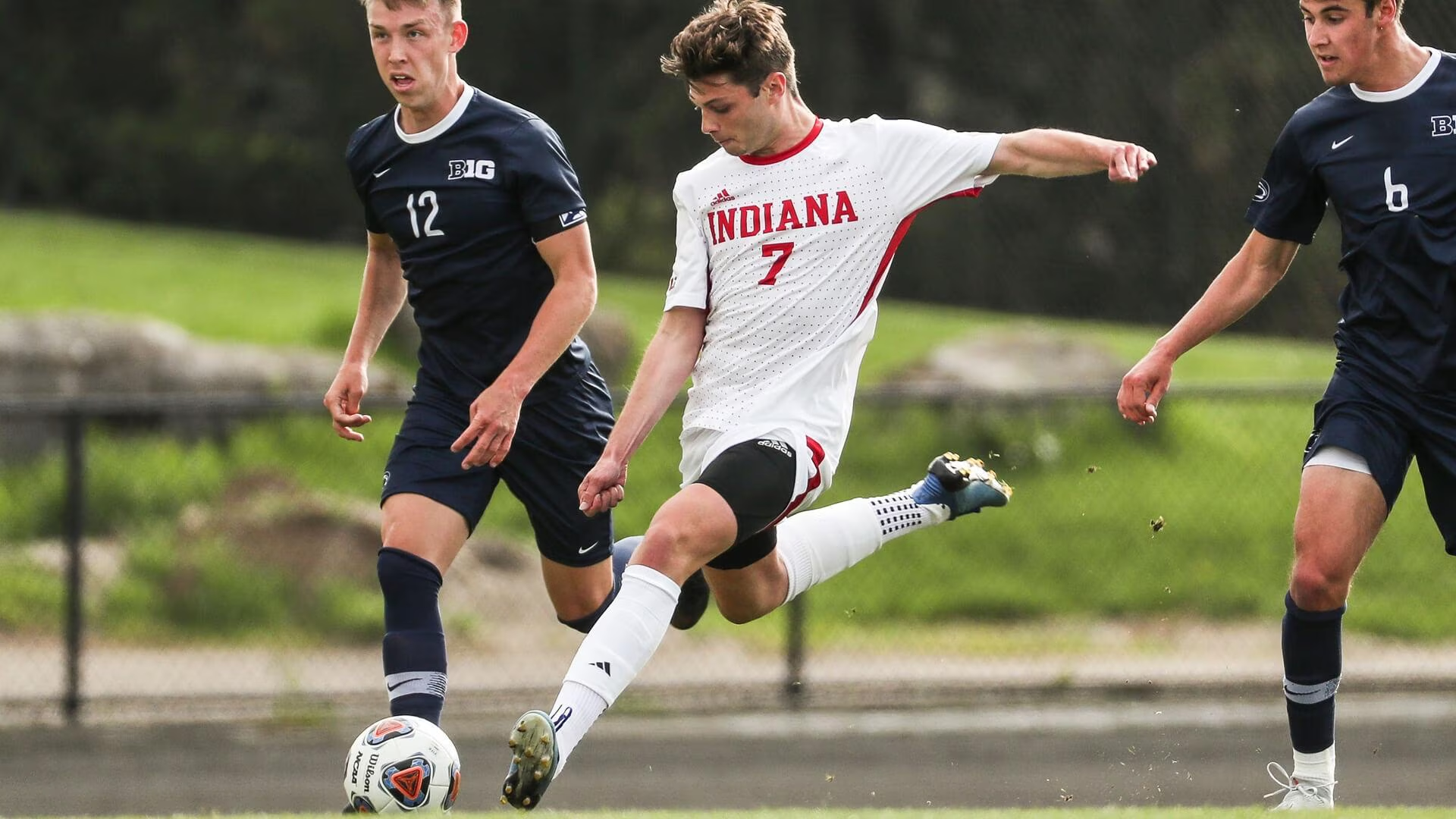
If you play club or high school soccer and dream about competing in college, you have probably heard a mix of hype, horror stories, and random advice about recruiting. One coach tells you to wait for camps. A teammate says their offer came from a DM. A parent in the stands insists that if you are not committed by sophomore year, you are already behind.
Under all that noise, there is one truth. College recruiting is a real, structured system, and you can learn how it works. Once you understand the rules, the calendar, and how coaches actually recruit, you stop guessing and start making moves on purpose.
In this guide, we are going to walk through the entire soccer recruiting process from early high school to signing day, so you know what to do, when to do it, and how to stay in control instead of waiting around hoping to be found.
How does the soccer recruiting process work from freshman to senior year?
If that question is already sitting in your head, you are exactly who this article is for. We will break things down in everyday language, then show you how an AI first platform like Pathley turns all of this information into a clear, personalized plan you can actually follow.
College recruiting is the process college coaches use to identify, evaluate, and eventually sign players for their program. You are not just trying to get noticed. You are trying to prove to specific coaches that you are the right fit for their roster, style of play, campus, and culture.
Most college soccer opportunities in the United States live in a few buckets.
• NCAA Division I, known for higher budgets, strong competition, and more national visibility.
• NCAA Division II, still very competitive, often with a strong balance between athletics and academics.
• NCAA Division III, no athletic scholarships, but huge opportunities for academic money and meaningful roles on good teams.
• NAIA programs, which often act like smaller D1 or D2 schools and can offer athletic scholarships.
• Junior colleges (JUCO), which can be a powerful two year bridge to four year schools if you need development, academics, or financial flexibility.
The NCAA and organizations like the NFHS publish rules and resources, but very few families have the time to piece it all together across different websites. That is one reason so many players feel lost.
Most college soccer programs have far fewer athletic scholarships than players they want on the team. That means many athletes are either partial scholarship players, walk ons, or getting most of their money from academic and need based aid.
Your real goal is to find a place where the roster spot, coaching staff, and financial package all make sense together. That usually comes from combining athletic aid with merit scholarships, need based grants, or outside awards, not from chasing a mythical full ride at the last minute.
Before you obsess over rankings or offers, you need to get clear on what you actually want from your college experience. Soccer is a big part of your identity, but it is not the only piece.
Ask yourself three simple questions.
• What level of soccer will challenge me without completely overwhelming me right away?
• What type of academics, major, or career path do I care about?
• What kind of campus, distance from home, and social environment sounds right for me?
Once you can answer those, it becomes much easier to decide which levels might be realistic, which schools make sense to target, and how aggressive you should be with coaches.
If you want help translating your current level, grades, and goals into actual schools, use the Pathley College Directory to explore programs, then let Pathley's AI narrow that universe into a shortlist that actually fits you.
Soccer recruiting happens over several years, not a single tournament. The exact dates change as the NCAA updates rules, so always double check with official sources and your club or high school coaches. But the general flow stays pretty similar.
During your first year or two of high school, most Division I and II coaches are not allowed to have personal recruiting conversations with you yet. They can watch you, follow your progress, and talk with your club or high school coaches, but they cannot be texting or calling you freely.
This phase is about development and foundations.
• Work on your technical level, athleticism, and soccer IQ. If you want to play in college, you need to stand out consistently in your environment, not just have a few highlight moments.
• Take your academics seriously from day one. Your core GPA matters for NCAA eligibility and for qualifying for academic scholarships later.
• Start paying attention to which positions and roles you are best at. Versatility is great, but coaches want to know where you realistically help their team.
Many players at this stage have no idea where they might fit. That is normal. What matters is building habits, getting honest feedback, and starting to think of college as something you are preparing for, not something that will just appear.
For many Division I and II programs, the window for direct recruiting communication opens around the middle of high school. That often means coaches can begin calling, emailing, texting, and setting up visits, depending on the latest rules for your sport and division.
This is when a lot of players realize that recruiting is not automatic. Coaches spend their time on players who make it easy to evaluate them and who show clear, genuine interest.
Your priorities in this phase:
• Build a simple, clean athletic resume that includes your basic info, positions, measurables, academic stats, and key achievements.
• Create a short highlight video that shows your best moments quickly, instead of a 12 minute clip coaches will never finish.
• Identify a realistic set of target schools at different levels, based on your ability, grades, and goals.
• Start emailing coaches with thoughtful, personalized messages that include your schedule, video link, and why you are interested in their program.
When should I start emailing college soccer coaches based on my grad year and current level?
Instead of guessing when to reach out, you can drop that exact question into Pathley and get timing advice matched to your class year, current level, and goals.
As you move deeper into high school, conversations with coaches should become more focused. Some coaches may invite you to campus for visits, ask you to attend specific ID camps, or talk about where you might fit on their depth chart.
Not every message means an offer is coming. Sometimes a coach is genuinely interested. Sometimes they are just doing broad outreach. Your job is to keep gathering information and asking clear questions.
By this stage, you want to:
• Narrow your list to schools where there is mutual interest, not just one sided dreams.
• Understand how each school's admissions, cost of attendance, and scholarship options will affect your family.
• Be honest with yourself about where you can realistically play early in your career, instead of chasing a logo that will leave you stuck on the bench.
Eventually, serious options turn into real offers. For some players that happens before their final year of high school. For others it happens much later, even after graduation through gap years or junior college. Your path does not have to match your teammate's timeline for it to be successful.
You do not need a fancy recruiting service to message coaches. You do need to be organized, clear, and respectful of their time.
A good coach email is short, specific, and easy to scan. Coaches read hundreds of messages. They will not dig through big blocks of text or generic hype.
Consider these elements.
• A clear subject line that includes your grad year, position, and a hook like your club or main strength.
• A short introduction with who you are, where you play, and why you care about their program.
• One link to your highlight video and one link to your full profile or resume.
• Your upcoming schedule, so they can see you live or on film.
After you send an initial email, following up with college coaches is normal. If you do not hear back after a reasonable amount of time, you can send a polite update with new video, achievements, or schedule info. Just do not spam coaches with daily messages or guilt.
Many programs use online questionnaires to pre screen prospects. Filling these out completely and accurately matters. It helps a coach understand where you might fit academically and athletically, and it signals that you take the opportunity seriously.
Social media and messaging can be part of recruiting too. Your public posts are part of your reputation. If a coach checks your account and sees consistent negativity, drama, or poor decision making, that can be a deal breaker no matter how good your highlight reel looks.
When a coach finally calls, remember that it is a two way conversation. You can ask about their roster, style of play, player development, academic support, and what they look for in your position. It is completely okay to say you need time to think instead of making a decision on the spot.
What types of colleges are the best fit for my soccer abilities and academic goals?
If you are not sure what questions to ask coaches, or which levels fit your current ability, that is exactly the kind of problem Pathley was built to solve in real time.
You do not need a flashy website, a professional film crew, or a long skills montage. You need something simple that helps a coach answer one question fast: Should I keep recruiting this player or move on?
A clean athletic resume includes your basics, academics, and soccer information in one place.
• Name, grad year, height, weight, primary and secondary positions.
• Club and high school teams, plus jersey numbers and coaches' contact info.
• Academic information like GPA, test scores if you have them, and intended major areas.
• Key soccer achievements or stats that actually mean something in your context.
Instead of hunting for online athletic profile examples and trying to reinvent the wheel, you can build and refine your profile inside Pathley's tools, then share it easily with coaches alongside your video and schedule.
Your highlight video is not a movie trailer. It is a tool to help a coach decide if they should invest more time watching full matches or seeing you live.
Keep it short, efficient, and focused.
• Aim for a few minutes, not a full game. Front load your best moments.
• Clearly identify yourself in each clip, especially in crowded sequences.
• Show the type of plays that match your position and how you actually impact games.
For some players, a separate skills video can be helpful, especially if game footage is limited. But in most cases, game clips that show your decision making, movement, and competitiveness tell coaches far more than isolated drills.
Every family wants to know how much this will cost. The honest answer is that almost nobody pays the full sticker price, and very few soccer players receive a full athletic scholarship that covers everything.
Most college soccer programs at scholarship granting levels divide their athletic aid between many players. Coaches might give a higher percentage to impact starters, a smaller percentage to depth players, and nothing at all to walk ons who still play important roles.
This means your chance of getting some athletic money is much higher than your chance of getting a true full ride. It also means that your value to a program is not defined only by your scholarship number. Role, development plan, and academic situation all matter.
The smartest families treat the financial side like a puzzle, not a yes or no question.
• Academic or merit scholarships for athletes who have strong grades or test scores.
• Need based aid, grants, and work study programs that come from your FAFSA and school policies.
• Athletic scholarships that stack on top, plus any local or private scholarships you earn.
Understanding how these pieces fit together is critical. A slightly smaller athletic offer at a school that gives you strong academic aid might beat a bigger athletic number at a school that offers little else.
If you are comparing options and struggling to see the full financial picture, you can lean on Pathley to keep track of offers, estimated costs, and scholarship stacking rules as they apply to your specific situation.
A lot of well meaning people will give you advice based on how things worked years ago, or on one player's experience that does not match yours.
One dangerous myth is that the soccer recruiting process starts when a college coach randomly discovers you at a tournament. In reality, most coaches build lists, track players, and plan their classes years in advance.
Another myth is that if you are good enough, the rest will take care of itself. Talent matters, but so does communication, academics, maturity, and the ability to handle the demands of college life.
Some people will also tell you that going to every ID camp is the key. Camps can be valuable, but only if they line up with your target schools or levels. A targeted camp at a school that fits you is far more powerful than a random showcase where no realistic programs see you play.
What should be on my 30 day plan to move my soccer recruiting forward?
Short, focused plans win. If you are not sure what your next month should look like, let Pathley turn all of this theory into a concrete checklist for your exact situation.
There is a lot to learn, but you do not have to memorize every rule or build giant spreadsheets to stay organized. If you can treat the soccer recruiting process like a season with a clear game plan, you can give yourself a real shot at finding a program where you will thrive.
Pathley was built as an AI powered recruiting guide for athletes, parents, and coaches who want clarity instead of confusion. You can ask real questions in everyday language, get personalized answers, and track schools, tasks, and progress in one place instead of juggling screenshots and random notes.
Use the Pathley Rankings Directory to discover new programs, explore the College Directory for details on schools you are curious about, then lean on Pathley's chat based assistant any time you hit a decision or roadblock.
Rosters, coaches, and division breakdowns for every NCAA and NAIA program we track.